Automating AOSR preparation: preventing errors in as-built documentation

An inspection certificate for concealed work (AOSR) is a key document in an as-built documentation set. A practical review of AOSR preparation shows that creating certificates manually brings systematic risks: data can differ between fields, numbering errors occur, and entries may not match material registers or the work log. Specialized cloud PTO platforms such as PTO Online use automated checks that prevent the usual errors while the document is being prepared.
AOSR preparation: regulatory requirements
Under RD-11-02-95, an inspection certificate for concealed work must state the project name, the work performed, the completion date, a reference to the design documentation, a list of materials used with their certificates, and the signatures of the responsible parties. When the form is completed manually, a PTO engineer has to transfer this information from several sources: quantity schedules, material registers and the work log. Every manual transfer creates a risk of error.
Common errors in manual AOSR preparation
Construction-control practice reveals the following recurring issues:
- Mismatched codes: the structural-element code in the certificate does not match the quantity schedule or the design documentation.
- Missing certificate references: a material is listed in the certificate, but its certificate has not been attached or has expired.
- Incorrect date: the work-completion date in the certificate does not match the entry in the work log.
- Incomplete signatures: the signature of one of the responsible parties required by the regulation is missing.
- Duplication: the same type of work appears in several certificates with different quantities.
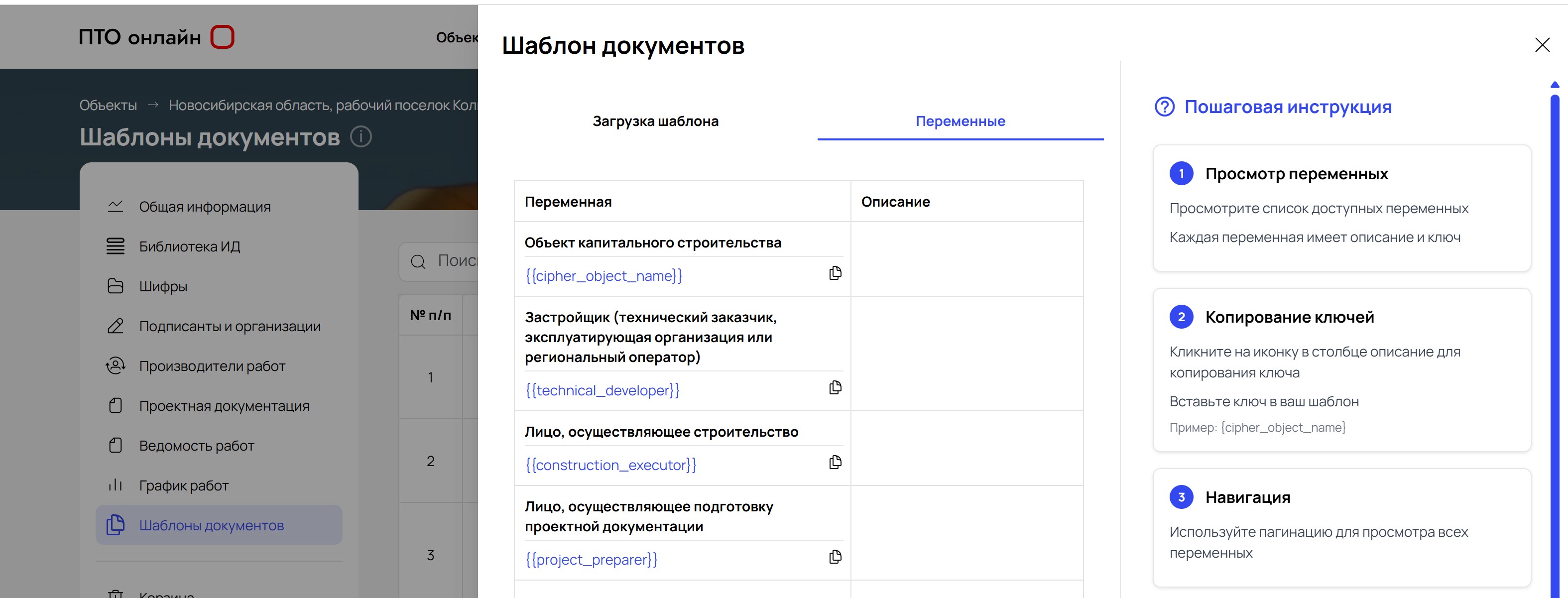
Automation algorithms in a cloud PTO platform
Specialized PTO management systems are built around a single source of data. In PTO Online, the AOSR preparation workflow works as follows:
- The PTO engineer selects the structural element from the quantity schedule, which serves as the single source of truth for the project.
- The system automatically brings in the code, name and quantity of work from the schedule.
- When materials are selected from the register, valid certificates and quality passports are attached automatically.
- The work-completion date is synchronized with the work log.
- The system checks whether all signatures are present and prevents the certificate from being saved if any required signatory is missing.
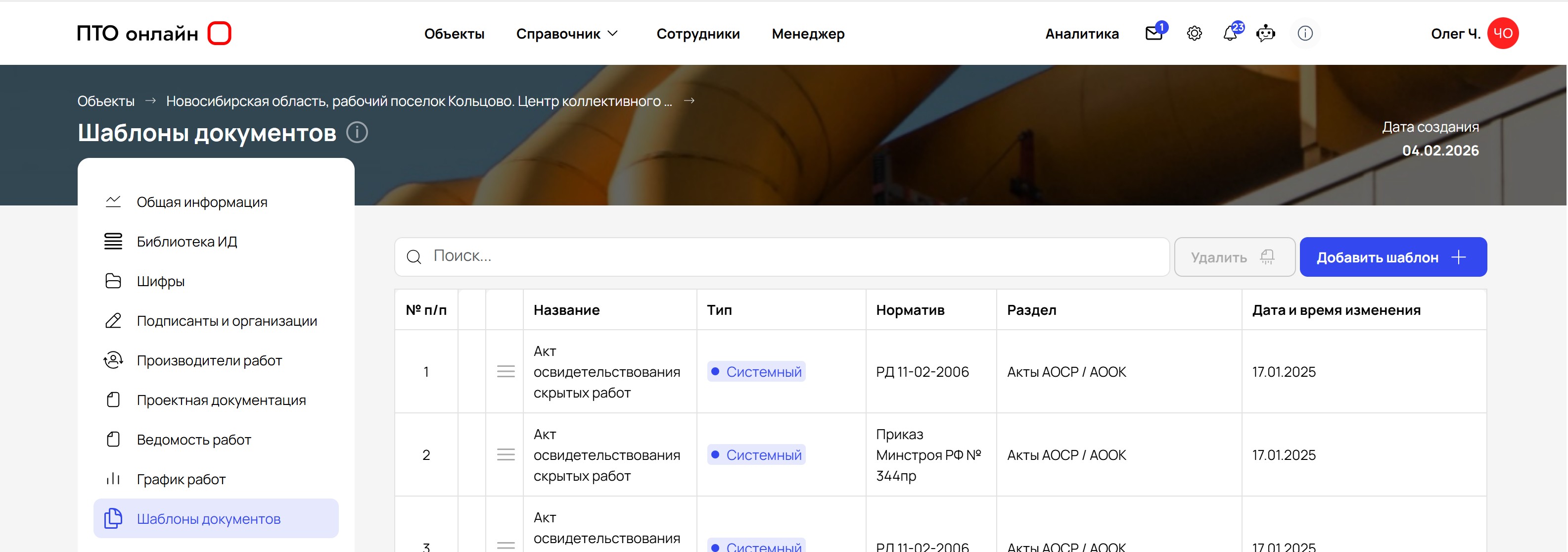
Benefits of automated control
Moving to algorithm-driven AOSR preparation provides the following practical benefits:
- No manual data transfer: every field in the certificate is populated automatically from a single database, preventing typos and inconsistencies.
- Automatic validity control: the system flags an expiring certificate before the material is included in the AOSR.
- Connected data: any change to the quantity schedule is reflected automatically in every related certificate.
- Change history: the system keeps a complete record of edits, including the author and the time of each change.
Conclusion
Automating AOSR preparation is an objective direction for the construction industry. The control algorithms built into specialized cloud platforms prevent common errors while as-built documentation is being prepared. This reduces the number of construction-control comments and speeds up submission of complete as-built documentation sets to the client.
Talk to us about PTO document workflow
Leave your name and phone number. We will call you back and suggest a format for the discussion.