Construction process automation: what digitalization delivers and where a team should start
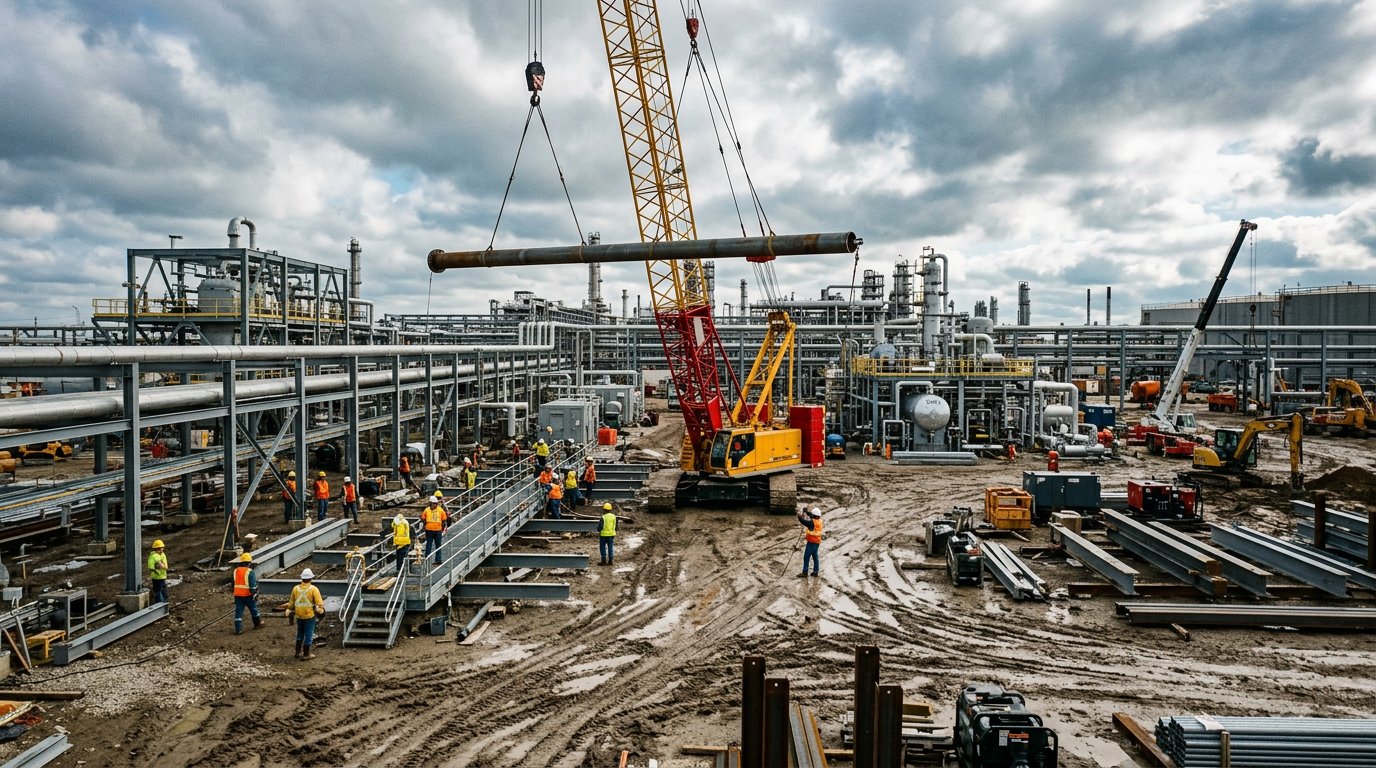
In everyday terms, automation is often understood as “we bought software, so things became easier”. In construction, that is only the surface layer. Real construction process automation starts when a company can name the chain: who records the fact that work has been completed, how information is passed to a subcontractor, where delivery confirmation is stored, how a deviation from the design is approved, and how a stage is closed against schedule and budget. If this chain does not exist on paper or in a procedure, software will accelerate chaos rather than management.
The office, the site and the subcontractor environment
Three areas of attention are usually identified. The office manages contracts, estimate logic, procurement and communication with the client. The site is responsible for actual completion, safety, logs and primary records, which are later used to compile certificates and reports. Subcontracting adds file exchange, drawing versions and different confirmation formats. Automation makes sense when these areas do not operate in complete isolation: there should be at least one shared project environment where statuses and document links converge, rather than merely “we sent the file in a chat”.
Schedule risks increase when several types of work run in parallel and contractors have different habits for recording data. In that situation, it is sensible to prioritise a single project reference directory and mandatory statuses. Otherwise, even well-chosen construction software will not produce a coherent picture without disciplined data entry and clearly assigned owners for every type of event.
Construction digitalisation and construction process automation: where they overlap and where confusion begins
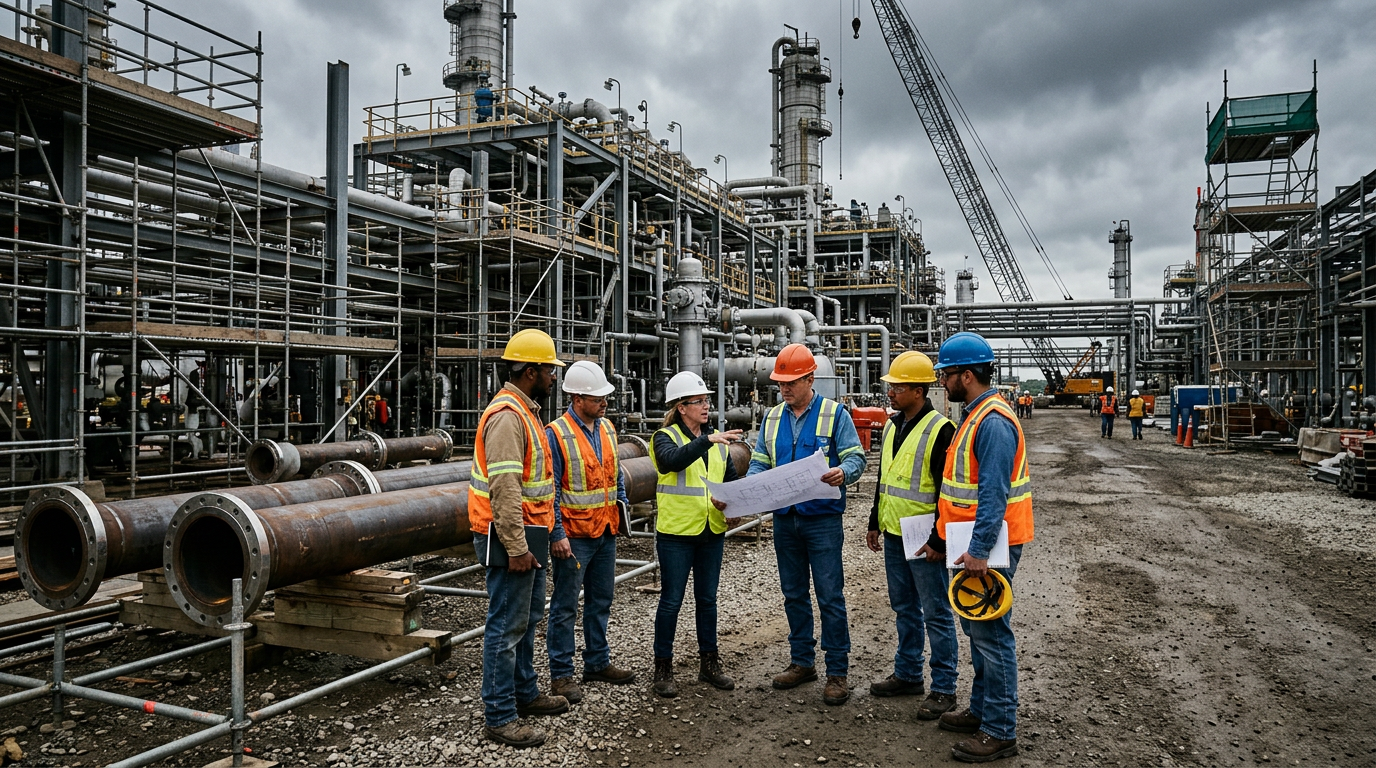
Construction digitalisation usually describes moving information carriers and communications into electronic form: drawings into a model or PDF, correspondence into email, approvals into a service. Construction process automation adds a rule: when event A occurs, event B should follow without manually copying the same details into five spreadsheets. The two approaches overlap because both rely on data. The difference is that digitalisation may stop at a file archive, whereas automation requires links between entities: work, material, responsible person, status and document.
To be frank, many companies are somewhere in the middle: part of their processes are digitalised, but there is little automation because there is no single source of truth for the project. In that case, construction process automation becomes a project not about “choosing a vendor”, but about defining which fields must match across the estimate, schedule and actual site results.
It is useful to separate the levels explicitly: construction digitalisation concerns data channels and formats; construction process automation concerns rules, statuses and triggers. Both can progress in parallel, but their metrics differ. For the first, it is the share of documents and messages handled through agreed environments; for the second, it is the reduction in hours spent on repeated data entry and the number of discrepancies between registers and tracking spreadsheets.
Typical areas: what is automated on site first
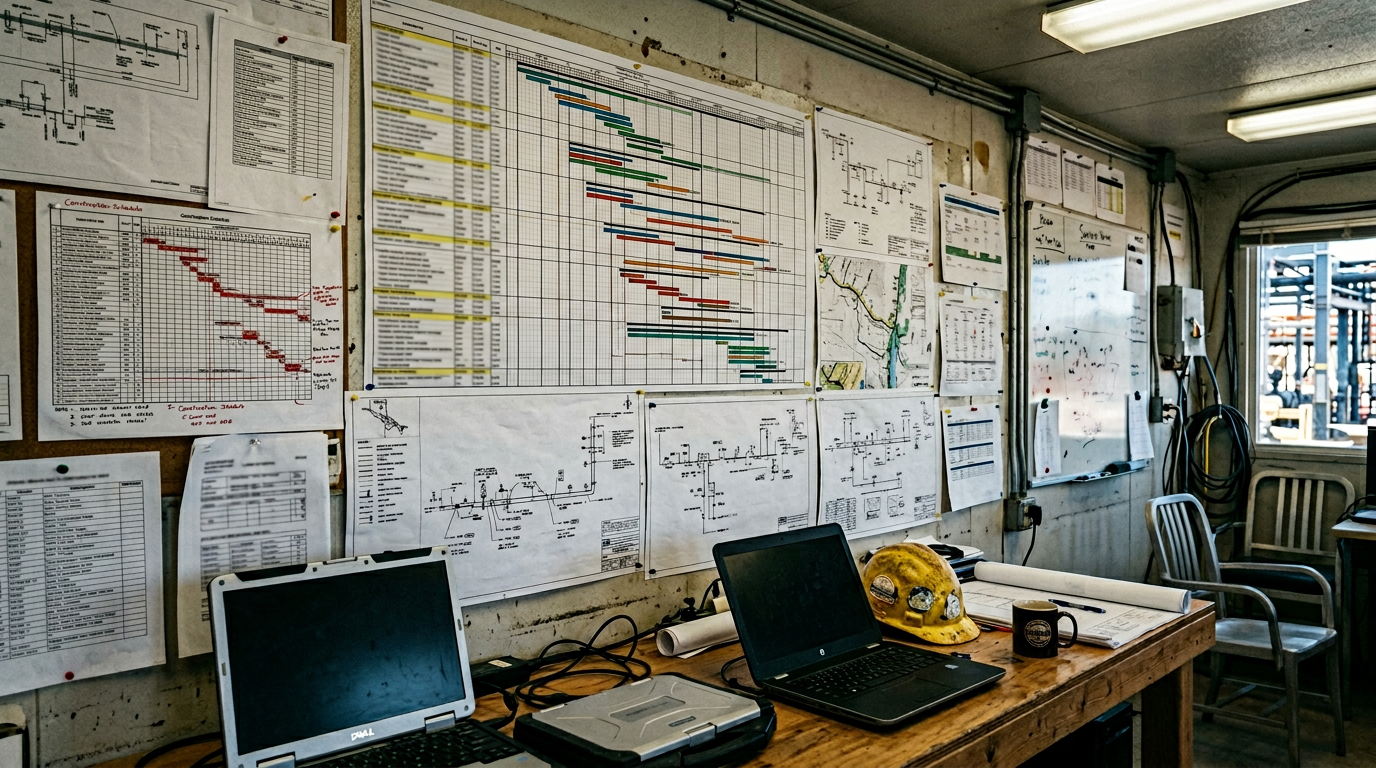
The practical sequence is often as follows. First, companies address the pain point where an error is costly in time or money: recording completed work and closing quantities, approving changes, incoming material inspection, and photographic records of concealed works. Then they connect document workflows around as-built documentation and registers, an area where manual duplication creates the most noise between the PTO office and the site. Only after that do they expand into procurement, warehousing and transport, provided the early gains are clear and the team does not resist the discipline required.
There is no need to automate everything at once. A pilot on one project with three to five measurable indicators is usually more convincing to management than a large-scale tender for a “system for every possible task”. Indicators should reflect the pain point: time required to close a stage, the number of returned document packages, the share of rework caused by data discrepancies, or the speed of responding to a typical client request.
Sometimes companies also address transparency for an investor or a bank at the same time: a report on actual completion, links to the schedule, and confirmations for key types of work. This does not replace internal automation, but it sets requirements for exports and for ensuring that the contractor’s construction management systems do not operate separately from the external reporting environment.
Construction software: records, communication and end-to-end workflows
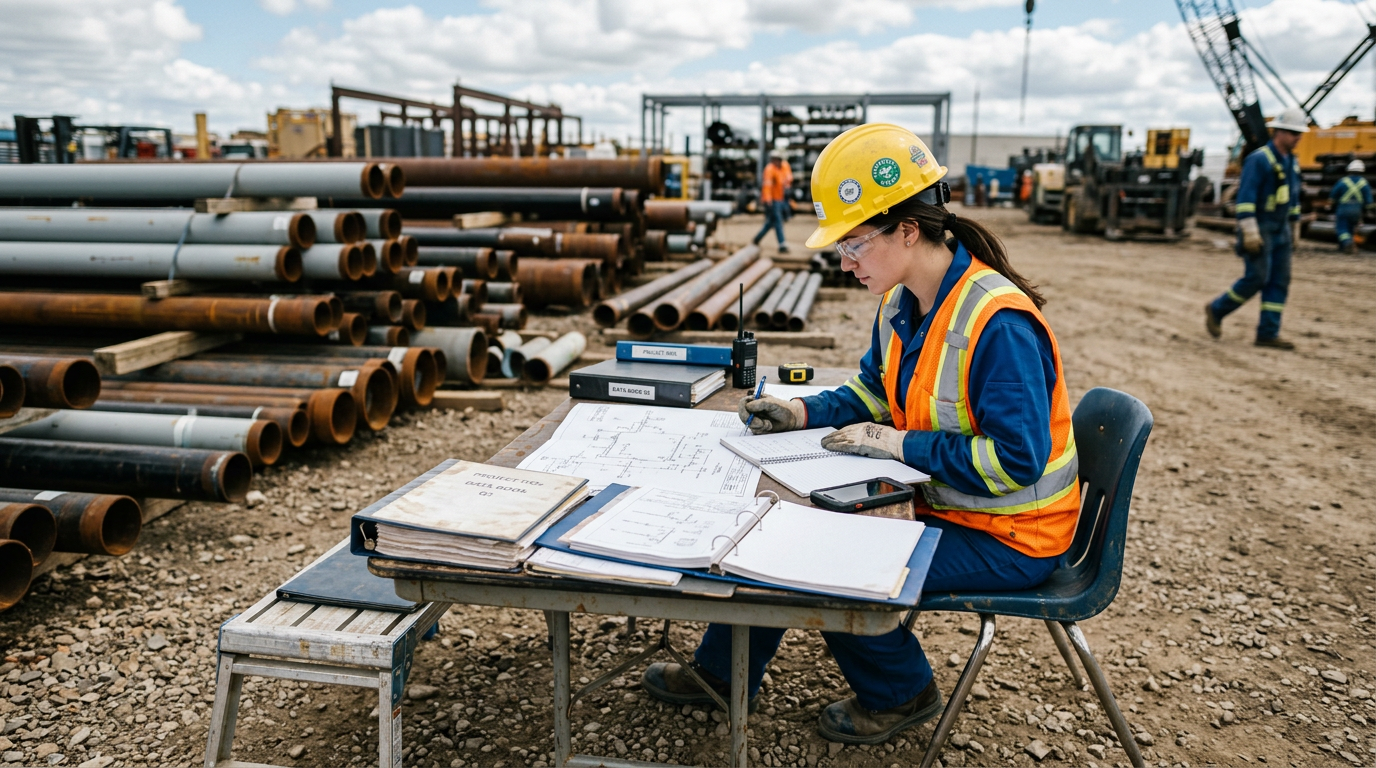
In its mature form, construction software answers not only the question “where is the file stored?”, but also “what is the status of this work and which documents should exist by a given date?”. General-purpose office tools work well as a space for drafts, but they struggle to maintain the construction-specific data model: project structure, work types, links between certificates and logs, and package completeness control.
Specialised solutions are most effective where end-to-end workflows are required: from recording an event on site to creating an entry in a register without manual transfer. For people responsible for PTO, this is especially apparent in the chain “actual completion → record → certificate → register”. In services such as PTO Online, the focus is often placed on the connection between the project, work and data, which is convenient for a pilot focused on document workflow and record-keeping.
Construction management systems: which tasks should be kept in one environment
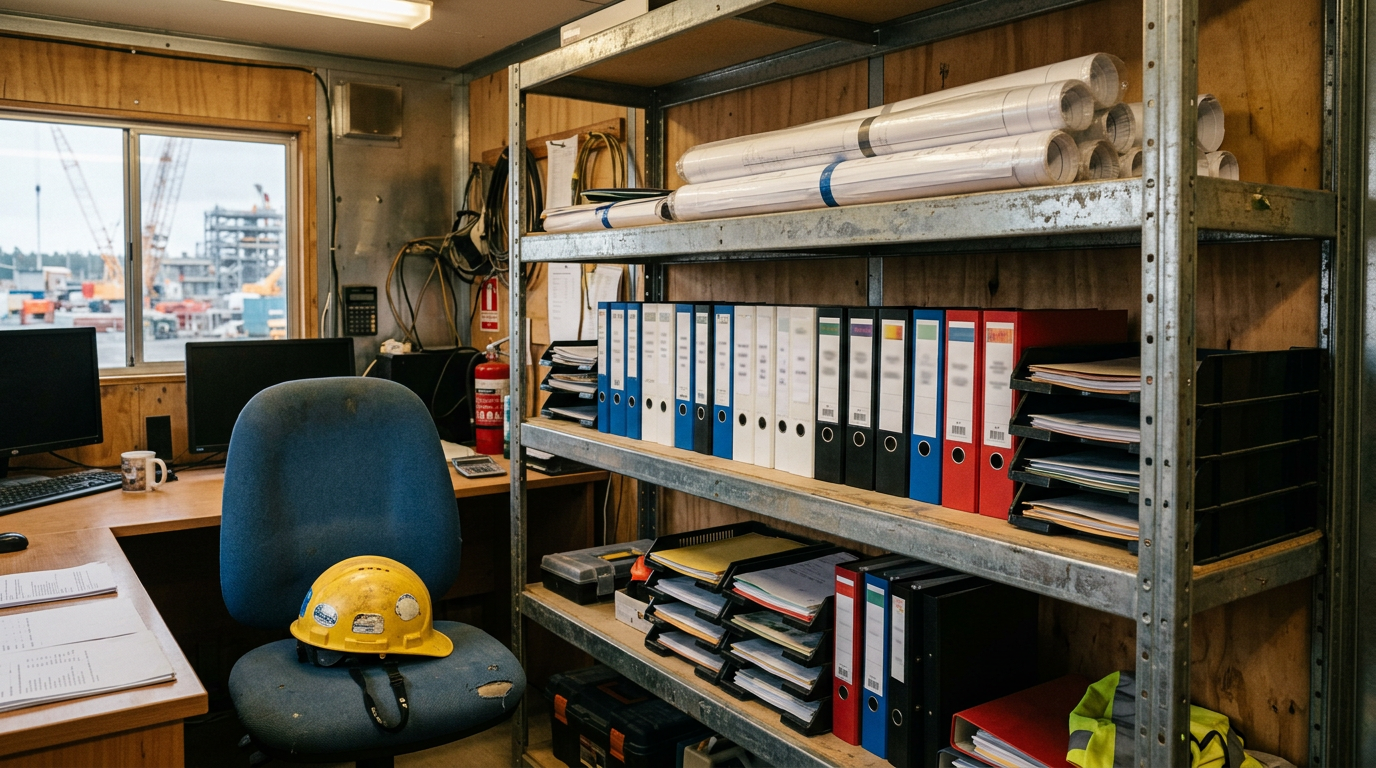
When a client speaks about construction management systems, they may mean very different things: one person expects a full ERP system, another expects dispatching and scheduling, while a third expects a PTO environment and submission of document packages. A minimum practical benchmark is this: the system should keep the project structure, roles, work and document statuses, and the change history for critical fields in one environment. Without this, integrations turn into a permanent repair job for the “joins” between services.
A good sign of a mature provider is that implementation starts with agreeing on workflows rather than demonstrating a long list of modules. For a contractor, it is important to understand in advance whether the client will require an end-to-end work identifier, how subcontracting is closed, and which reports the bank or investor needs. That is how construction management systems are selected: not by a brochure, but by their coverage of your mandatory workflows.
Large clients often connect their own acceptance portals or require machine-readable exports. This adds a compatibility criterion. There is no need to chase an “everything in one window” solution, but it is necessary to understand how data from the chosen system will reach the client’s environment without weekly manual reconciliation in Excel.
Regulations, roles and data: what no single system can replace
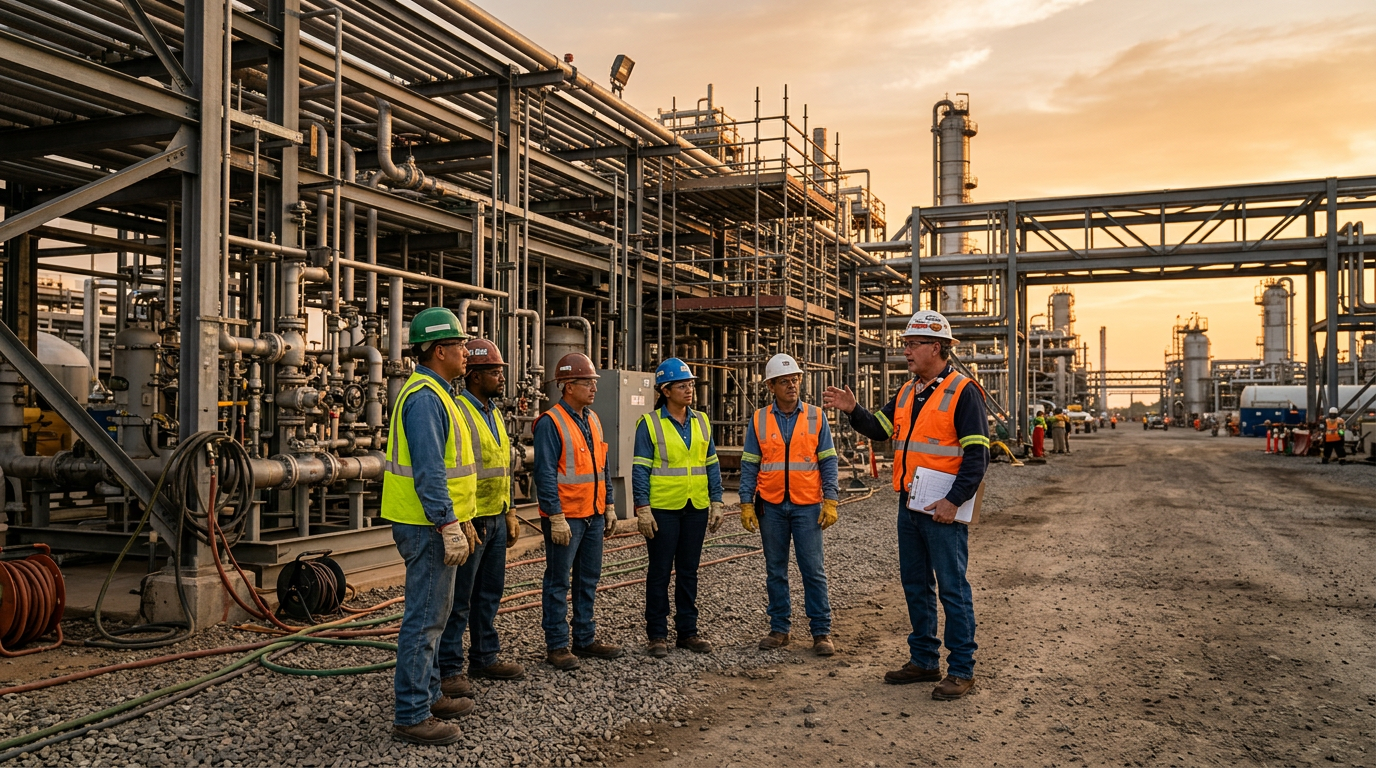
Even strong construction software cannot replace agreement on responsibilities: who enters actual completion data, who approves a schedule change, what counts as a blocking comment, and how incoming inspection is recorded. Without this, construction digitalisation ends with the formal statement that “everything is in the system”, while decisions are still made in correspondence. Construction process automation strengthens discipline, but it does not create it from scratch.
Training and staff turnover on site are equally important. If every new site superintendent or PTO engineer has to investigate “where the truth is stored”, the environment is not reproducible enough. Procedures and vendor support matter here no less than the list of functions in the contract.
The legal and regulatory dimension also affects which documents and signatures are considered acceptable. Construction digitalisation in exchanges with the client must match contractual requirements. Otherwise, even carefully configured automation of construction processes within the company will not help in a dispute over which version of a certificate or log was valid on the inspection date.
Selection and pilot: how to reduce implementation risk
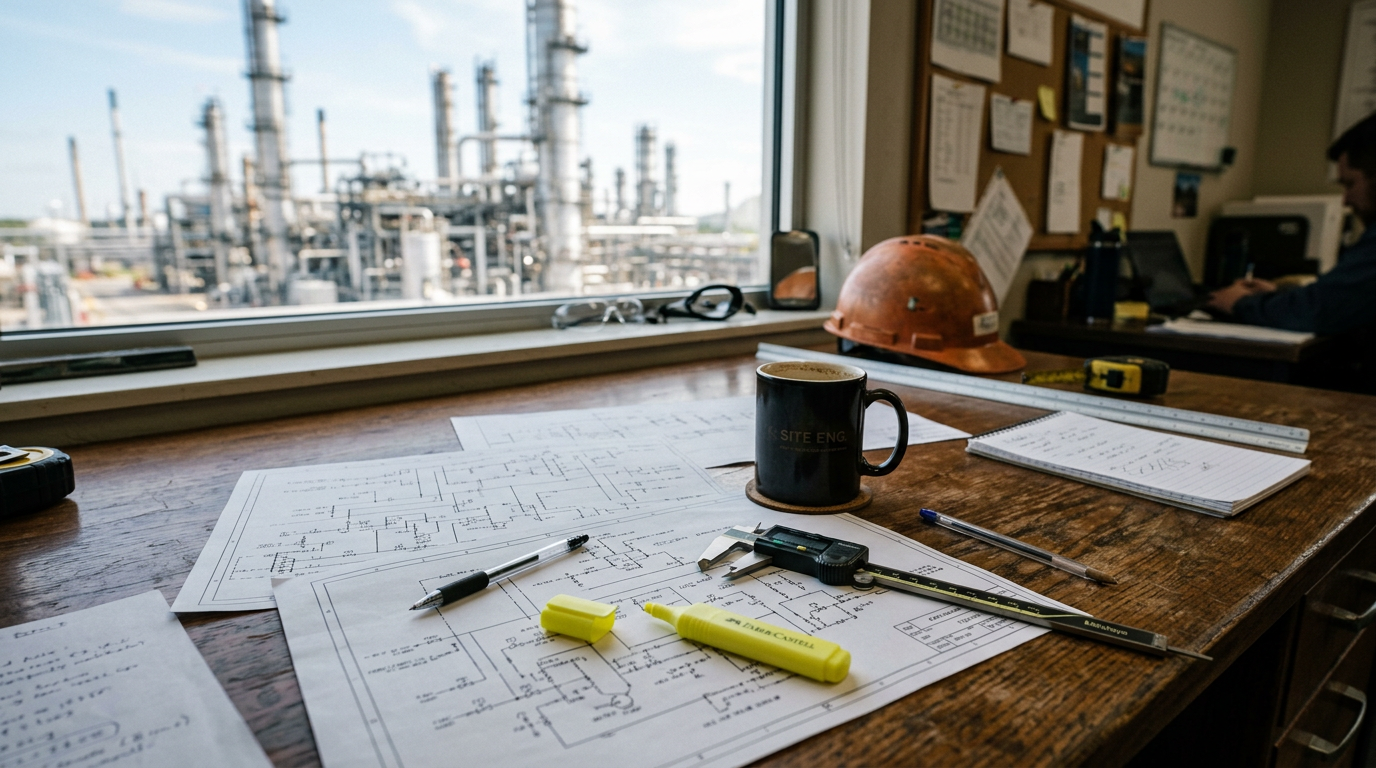
It is sensible to start with a clearly defined pain point rather than a product name. If the main issue is a discrepancy between actual results and reporting, look for transparent statuses and a single project model. If the issue is approval lead time, review workflows and notifications. If the issue is the quality of a document package at handover, assess completeness control and links between documents and work.
A pilot on one project with a limited set of processes is usually less risky than “implement everywhere within a quarter”. In practice, it is useful to record in advance what counts as success: for example, a reduction in the time needed for a standard package, fewer returns caused by formal errors, or less manual duplication between spreadsheets. For example, in the PTO Online platform, processes around as-built documentation are built around a single project model. This is convenient to demonstrate in a pilot when you need to compare a “set of files” with an end-to-end digital environment.
Resistance on site is more often connected not with “bad software”, but with the feeling of doing double work during the transition period. That is why a pilot should be designed with a clear date for switching off the old workflow and with a minimum period during which the same data is maintained in parallel in two places. Otherwise, construction process automation gets stuck between old habits and the new environment before it has a chance to show an economic benefit.
Key takeaways
Construction process automation makes sense when a company is ready to describe its data flow and responsibilities, rather than simply purchase access to a service. Construction digitalisation without rules quickly runs into version chaos; construction process automation without a single project model becomes accelerated manual data entry. Construction software and construction management systems should cover your mandatory workflows, not an abstract idea of “the best option on the market”.
If you would like to compare the theory with practice, visit pto-app.ru: there you can see how processes around a project and its documentation are organised and assess how close this is to your current environment, without being required to change your entire IT architecture immediately.
Talk to us about PTO document workflow
Leave your name and phone number. We will call you back and suggest a suitable format for the discussion.