Electronic construction work log: how to keep the as-built documentation package intact at handover

A certificate records the result, but it often does a poor job of showing what happened with comments before that point: what was closed, what remained for revision, and who approved it in which role. Construction supervision logs and the related notebook-style forms traditionally existed as a continuous record: what was entered, checked, accepted and removed. When as-built documentation is added to this logic, the acceptance engineer looks not at the appearance of a stamp but at consistency: the reference in the certificate, the log entry, the note in the statement, the signatures of those responsible and the absence of gaps. In the paper trail, a gap looks like an empty spread; in the electronic record, it may appear as an unfinished status. Handling this is easier at handover when digital information is not kept separately but belongs to the same chain as the final package. So the question 'Do we need an electronic log?' is not about fashion. It is about ensuring that the chain actual work -> record -> approval -> certificate contains no blind days that later have to be closed with explanations rather than site data.
Paper logs and the trail of inconsistencies in as-built documentation
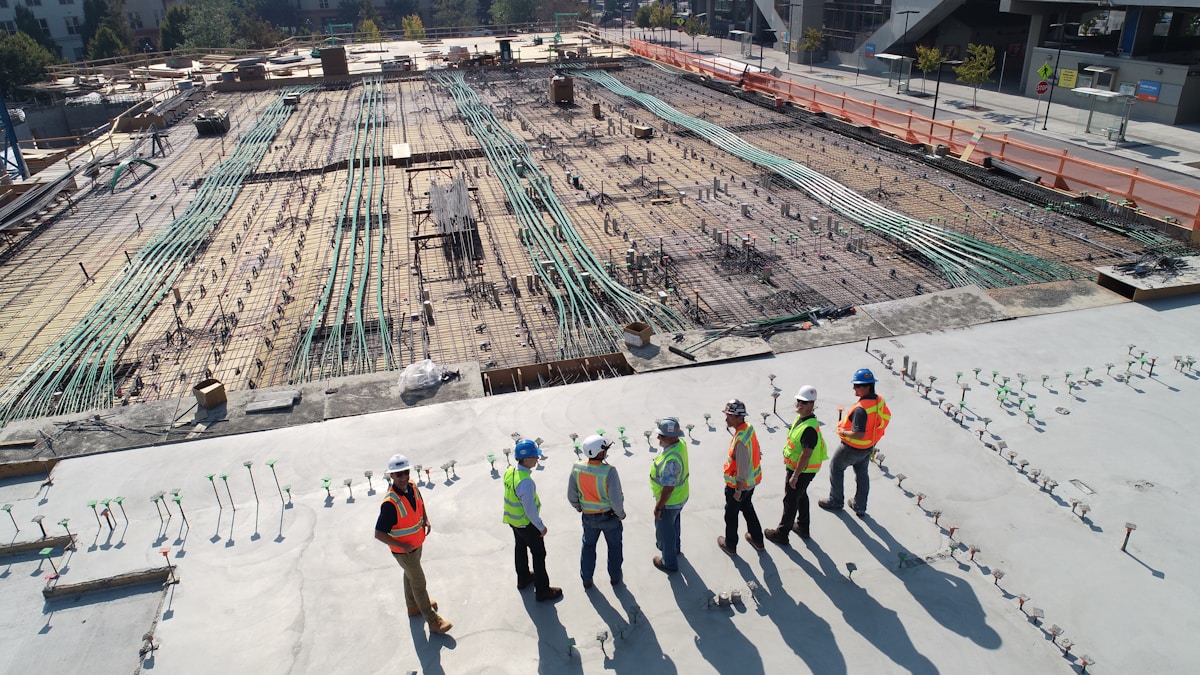
When maintained in isolation, a paper log accumulates familiar risks: an invalid entry, a missing countersignature, different pens, changes entered after the fact, or dates that do not match the certificate. For a PTO department, this is a real burden: the paper 'tail' cannot be left unresolved while the digital record does not add up. Otherwise, during an external inspection, the team may be forced to say, 'That is what the field team told us,' without confirmation in approved forms. When an electronic work log is introduced alongside paper records, the benefit is not that the printed notebook is discarded overnight. The benefit is that a rule is established: an entry captured in the electronic trail closes the question of date, scope and responsible person without an ambiguous note in the margin. The printed record then either duplicates signed fields or goes into the archive, while handover follows a route that PTO can check for completeness without comparing it with messenger correspondence. This reduces the situation in which the package appears complete but the log section is empty - one of the surest ways to have a package returned.
Electronic work log: what a digital record of actual work provides

An electronic work log, when it is not mistaken for 'another PDF folder', is essentially a sequence of events with a date, a reference to the relevant structural element, participants and a status. When entries are made from the site or in close connection with it, the layer between 'the notebook in the cabinet' and 'the spreadsheet updated when someone remembers' disappears. The record matters to three parties: site managers, so a shift is not delayed by an unclear approval; subcontractors, so they do not approve work that has not yet been placed in the chronology; and PTO, so the same trail can be used to prepare a statement and include in the package the evidence to which the acceptance engineer can refer without dispute. What matters here is not enthusiasm for a button but a lower cost of error: an empty date, a mixed-up code or a missing signature can be caught in an electronic field, when controls are configured, before the printed package goes out for delivery. In the broad sense, an electronic completed-work log is a completion overview: who closed what, on what basis and in what order, without the abyss of 'I do not know who ticked that box.'
If the digital environment for a project is maintained in a specialised system, the benefit for the work log is that project entities, statuses and forms included in the package do not live in separate files that someone has to stitch together manually at the end of the quarter. In this role, the PTO Online service (https://pto-app.ru/) reduces friction between the site and handover when the project procedure is ready for it, without replacing the meaning of roles and responsibility in the field.
Electronic production work log and data entry on site
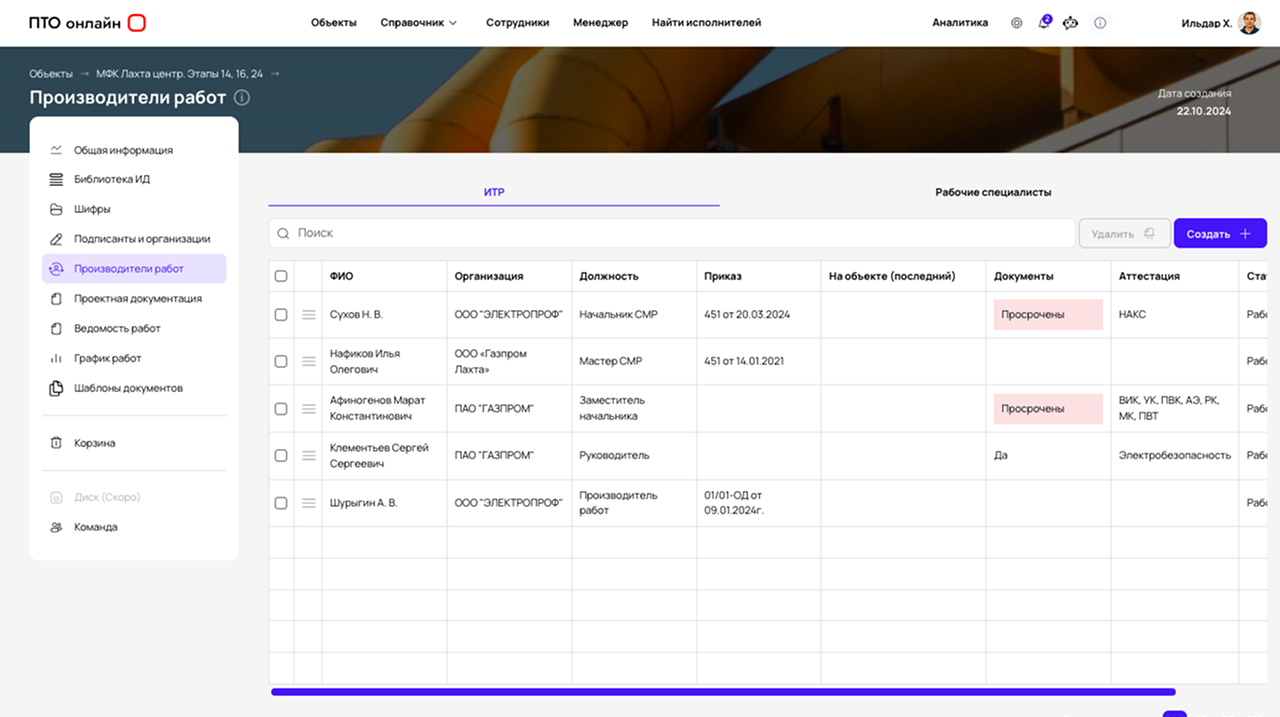
An electronic production work log is called different things in practice, but for handover it answers one question: what was produced during a shift, day or cycle, in what volume, with which attachments and at what stage of readiness. When PTO uses this record to feed the schedule and registers, the situation disappears where Excel figures look fine but gaps in the actual plan were never signed off because the person responsible for the work had no trigger. Electronic data entry, when it provides for roles and stops incomplete records, straightens this loop: first the actual work is recorded on site, then it is approved, then it becomes part of the PTO package. It is important that the line between internal and external information in the log does not become blurred: outward-facing records should be ready for approval, while internal records should contain comments that PTO does not mistake for completed work.
Electronic work accounting log: linking the log to statements
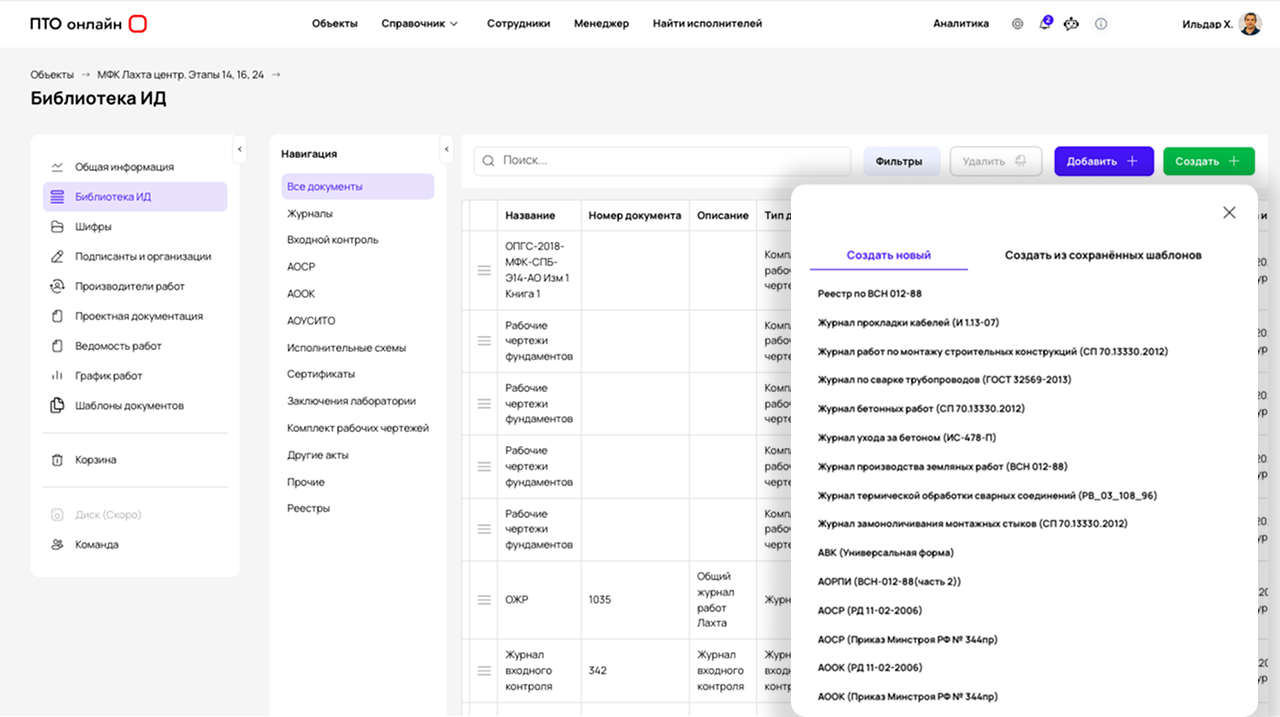
Accounting is a mirror in which volume, the project reference, deviations, attached appendices and the numbers that will surface in the package must all reconcile. An electronic work accounting log, when it is not mistaken for a report 'for management', is the substance behind statements and reconciliations. When PTO assembles as-built documentation, it generally values consistent fields that can flow into a register, rather than a laptop where the volume has been copied by hand from a source nobody remembers. When digital figures do not match the site, the electronic layer removes the question of whose version is correct: it shows who entered the information, who approved it and who withdrew it on the latest date. In the paper trail, that information is recovered by turning pages and checking stamps; in the electronic trail, it is a comparison of versions, provided that the electronic work log is maintained under a procedure rather than under a practice where 'someone deleted everything yesterday because it was in the way.'
Maintaining an electronic work log as a discipline of roles
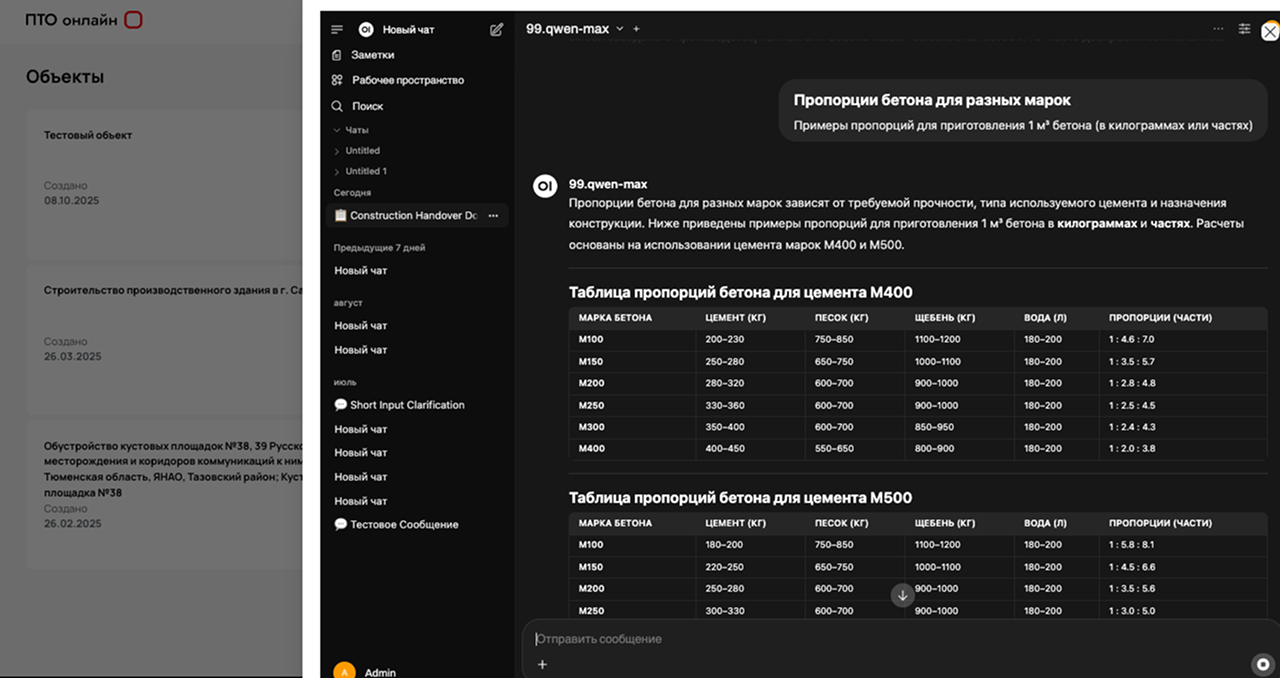
An electronic tool does not eliminate roles: someone is responsible for entry, someone for review, someone for final status and someone for exporting the package. These are people, not fields. Maintaining an electronic work log makes sense when the threshold is clear: what counts as a draft, what may be published externally, who removes the 'awaiting photo' block and who may roll an entry back. Where several contractors work on a project, the parties should also agree on the level at which subcontractors can see neighbouring fragments, so that internal notes are not exposed unnecessarily. For handover, format is less important than consistency: the package refers to a code, the log contains the same reference, the certificate identifies the same structural element, and the response to comments points to a date that remains in the digital trail. This is easier to maintain when the environment in which PTO assembles as-built documentation does not require the same figures to be entered manually again. This is the logic of a single environment in which the log and the package work together on the project rather than first meeting on the final day.
For the service that holds the data, the advantage is the ability to enter information under one logic and export it as part of the package without scattering it across files, provided that the project procedure is ready for it. Before multiplying 'just-in-case' copies, it makes sense to compare how this is arranged in PTO Online (https://pto-app.ru/) with your own folders-and-spreadsheets workflow.
Electronic completed-work log and a handover-ready overview
Handover is brought to completion when the package is closed: what was closed, how it was confirmed, what was attached, in which order and who made the final entry. An electronic completed-work log, when it contains real meaning, is the overview shown when questions move beyond formal checklists to the substance: 'Was this really completed in that volume, and was this approving person actually on site?' Where the digital record preserves the route, there is no need on the last evening to connect printed inserts that do not exist in the electronic branch. PTO benefits when the completion overview matches the statements, the statements match the certificates, and the certificates refer to the same chronological layer rather than to information buried in correspondence. This also applies to a paper workflow if it still exists alongside the digital one: a printed stamp should not appear without the electronic step when the procedure treats the digital record as the primary source.
Questions such as 'How do we maintain an electronic log if the team lacks discipline?' are not solved by changing software. Agreements and visible accountability matter. The electronic layer simply makes a gap visible sooner - which is useful when the system still allows time to correct it, rather than forcing the team to fight a returned package.
Conclusions
Construction supervision logs and related records of actual work are not decoration. They are the stitching that holds together the question: 'Have we confirmed the progress of the work before signing the package?' Electronic forms, when maintained as an end-to-end record, remove the most expensive risk: inconsistent dates, codes and approvals that surface during acceptance. An electronic work log, an electronic production work log, an electronic work accounting log and an electronic completed-work log are not four different software products. They are four meanings that, in a healthy process, converge into one chronology that PTO can attach to the as-built documentation package without working through the night. Paper may remain, but the purpose of digital records is to prevent the acceptance engineer's questions from becoming an excavation that you cannot honestly finish before the deadline. If a digital environment is closer to your needs, focus on consistency, roles, the priority of the source record and a pilot before creating 'one more spreadsheet for every shift.'
Additional materials and support options are available at pto-app.ru (https://pto-app.ru/). Compare your work-log workflow with the package you submit, and check whether you have hidden duplication in five 'just-in-case' copies.
Talk to us about PTO document workflow
Leave your name and phone number. We will call you back and suggest a suitable format for the discussion.