Reconciling estimates, certificates and actual quantities: a practical PTO workflow
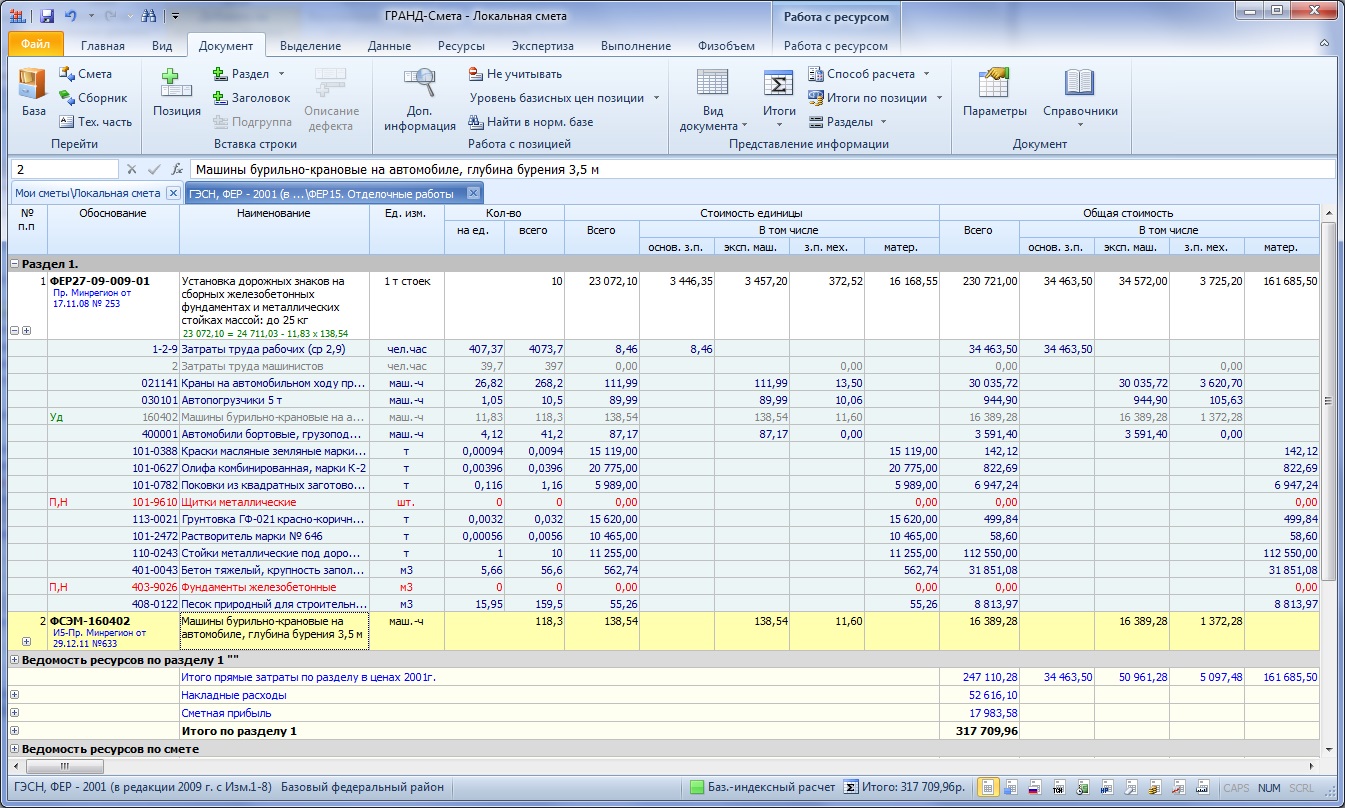
In an ideal construction project, the detailed estimate fully matches the working documentation, and the quantities actually completed on site match the work completion certificates down to the millimeter. In reality, a PTO engineer deals with discrepancies every day: the estimate provides for one quantity, more has actually been installed or poured, and the KS-2 certificate must be closed only for the amount the current budget allows. Reconciling the estimate, the certificate, and actual quantities turns into an endless reshuffling of spreadsheets, where even a small mistake can lead to financial losses or conflicts with construction supervision. In this article, we explain how to build a practical connection between these three elements to minimize manual work and avoid confusion in the documentation.
The PTO triangle: the estimate, the certificate, and actual site conditions

Every construction process rests on three pillars: what is included in the budget (the estimate), what has actually been built (the actual result), and what has been formally confirmed in documents (the certificate). The problem arises when these three elements begin to operate independently of one another.
Estimators work in their specialized software, using unit rates and norms. Site supervisors see the real situation: material overruns, the need for additional work, and changes to design solutions. The PTO engineer stands between them, trying to align estimate line items with quantity registers and inspection certificates for concealed work (AOSR). If this “triangle” is not synchronized, the company either loses money on unrecorded work or cannot hand over the project because of discrepancies in the documentation.
A single work-item axis: codes and identifiers as the foundation of accounting
To connect the estimate, the certificate, and actual quantities, you need a single identifier. It is impossible to reconcile data automatically when an estimate calls a line item “Concrete blinding installation,” the work log calls it “Pouring B15 concrete,” and the certificate calls it “Concrete blinding beneath the foundation.”
The single “axis” should be the work code or a code from the classifier. Every line in the detailed estimate should have a unique identifier that carries through quantity registers, the General Work Log (GWL), and certificates. Only with such an axis can reconciliation be transparent: the PTO engineer can always trace which estimate line item gave rise to a particular certificate, how much of that item has already been closed, and how much remains.
What should be treated as the source of truth at different stages of construction
Conflicts often arise because people do not understand which document is primary at a particular stage.
At the planning stage, the detailed estimate and working documentation are the sources of truth. During construction, the completed-work log and as-built drawings, which record the actual result, take priority. At handover, the signed certificate and the KS-2 form are primary.
A PTO engineer must clearly understand this hierarchy. If the actual quantity exceeds the estimated quantity, the certificate cannot be signed without additional approval. The actual result must be recorded, but the estimate remains the source of truth for closing quantities until a supplemental agreement has been approved.
When to reconcile: why you cannot wait until month-end close

The traditional approach, in which quantities are reconciled during the last days of the month before the KS-2 form is submitted, inevitably creates a rush. At that point, teams discover that some certificates have not been signed, quantities do not match, and the required certificates are missing.
Reconciliation must be a continuous process. As soon as a site supervisor records that work has been completed in the log, PTO should compare that quantity with the remaining estimated quantity. If an overrun is found, the signal should be raised immediately, not at the end of the month. This makes it possible to promptly initiate approval of additional work or a design adjustment without interrupting financing for the current stages.
How to record discrepancies without rewriting the entire document set

Discrepancies are inevitable. What matters is knowing how to document them correctly. If the actual quantity is lower than the estimate, there is usually no issue: the actual quantity is closed. If it is higher, the PTO engineer faces a dilemma: close the amount stated in the estimate and cost the company money, or show the actual amount and risk the certificate being rejected for signature.
A practical approach is to separate the records. The as-built documentation records the actual result, supported by as-built drawings. KS-2 certificates close quantities within the estimate. The difference is recorded in a separate register of unaccounted-for or additional work, supported by additional-work certificates and sent to the client for approval. The key is not to try to make as-built drawings fit the estimate, as this is a direct violation and creates risk during subsequent inspections.
Edge cases: carried-forward quantities and material substitutions
Material substitutions and quantities carried forward between periods make reconciliation especially difficult. For example, the estimate may specify one type of cable, while another was installed in practice with the designer’s approval.
In such cases, the link between the estimate and the certificate becomes more complex. The PTO engineer must not only reconcile quantities but also attach to the certificate documents substantiating the substitution, such as letters, approvals, and new certificates. If a quantity is carried forward to the next month, the quantity register must clearly record the carried-forward balance. Without a single accounting system, these edge cases turn into a tangle that is nearly impossible to unravel six months later.
Automating reconciliation: from manual spreadsheets to transparent registers
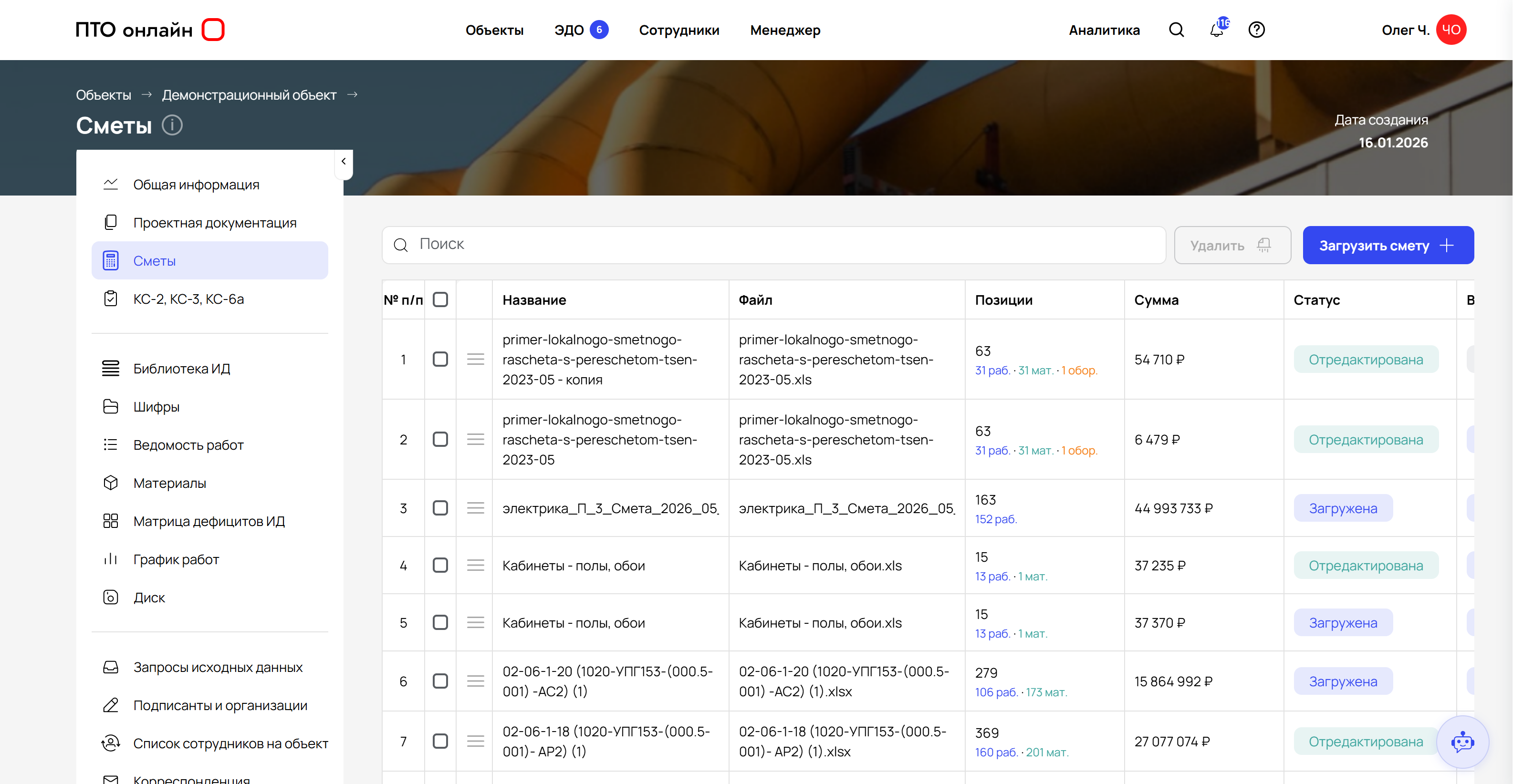
You can reconcile the estimate, actual quantities, and certificates in Excel when you have one small project. On large projects with hundreds of line items and dozens of contractors, manual reconciliation becomes an error generator.
Automating this process fundamentally changes PTO work. Modern solutions let you upload detailed estimates directly into the system and automatically extract work types, quantities, and units of measurement. When a certificate is prepared, the system itself checks whether the stated quantity exceeds the remaining estimate and highlights discrepancies.
This approach eliminates human error when data is transferred and makes the reconciliation process transparent for every construction participant. Instead of spending days looking for missing cubic meters of concrete, the PTO engineer can focus on quality control and timely project handover.
Simplify your work with estimates and certificates
Learn how PTO Online helps you extract data from estimates automatically, track remaining quantities and prepare statements without manual transfer of figures.