Excel or a cloud-based PTO platform: when spreadsheets stop being enough
An objective review of current practices shows that Excel remains the global standard for getting started and for individual calculations in construction. It is a flexible tool that does not require a lengthy implementation process. However, as a construction project grows, both the volume of data and the number of people involved inevitably increase. At a certain point, there is an objective need to move from flat spreadsheets to relational databases and specialized cloud services.
The evolution of PTO tools: from local spreadsheets to databases
An objective review of current practices shows that Excel remains the global standard for getting started and for individual calculations in construction. It is a flexible tool that does not require a lengthy implementation process. However, as a construction project grows, both the volume of data and the number of people involved inevitably increase. At a certain point, there is an objective need to move from flat spreadsheets to relational databases and specialized cloud services.
Five systemic limitations of spreadsheets in construction document workflow
In day-to-day work, construction organizations encounter the following issues:
Synchronization issue (version control): Conflicts arise when several engineers work simultaneously in local or network files, resulting in numerous duplicate versions of registers.
Data connectivity: There is no automatic link between separate spreadsheets, such as act registers, work schedules, and material registers, so information has to be transferred manually.
Security and change history: Technical auditing in traditional Excel is difficult: it is problematic to determine who made a specific change to a document and when.
Performance: The application can slow down substantially when processing large files containing thousands of rows and complex linked formulas.
Risk of data loss: Human error when working with complex macros and formulas means that accidentally deleting a single cell can disrupt an entire summary report.
Cloud platform architecture: the example of PTO Online
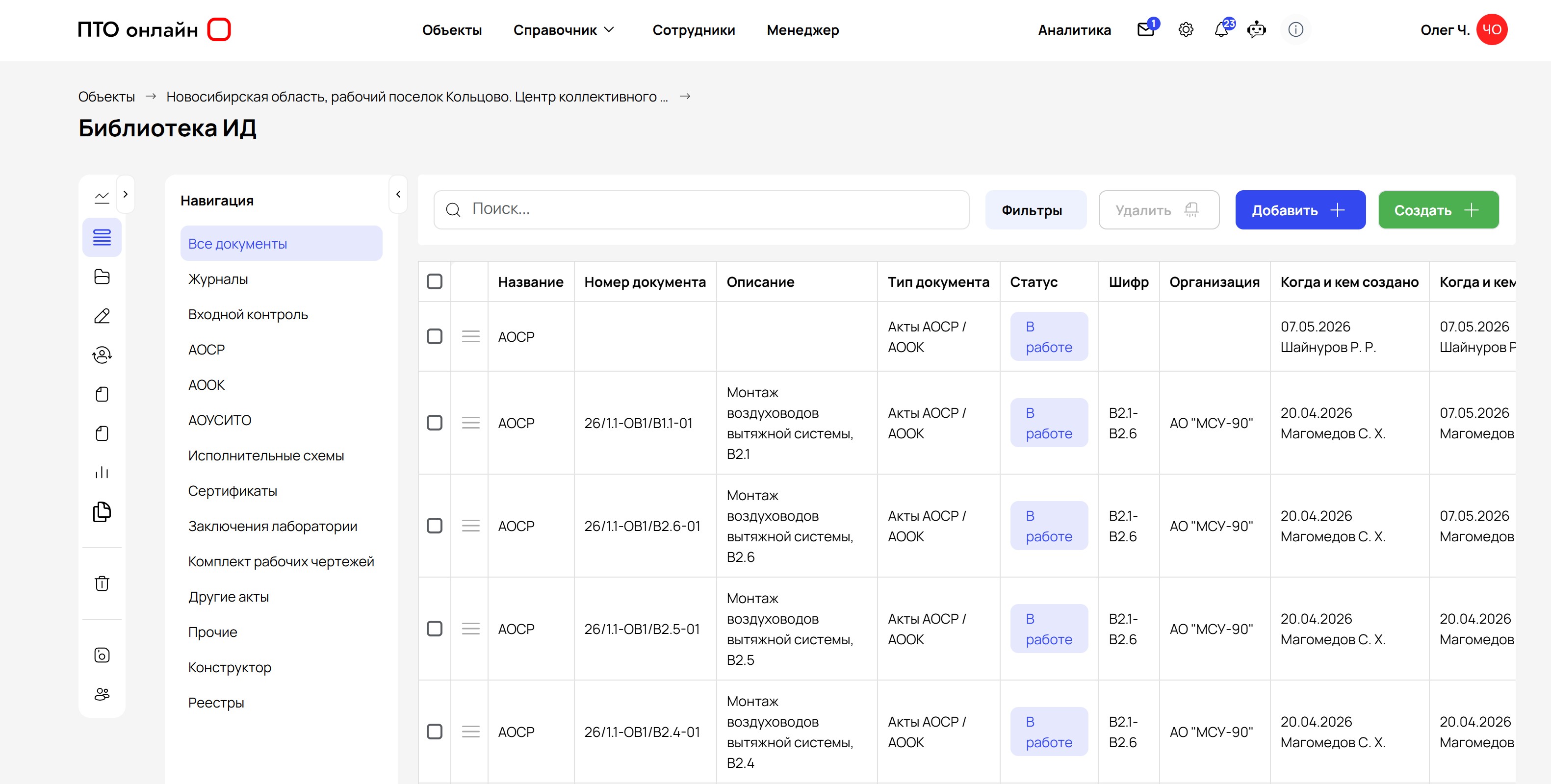
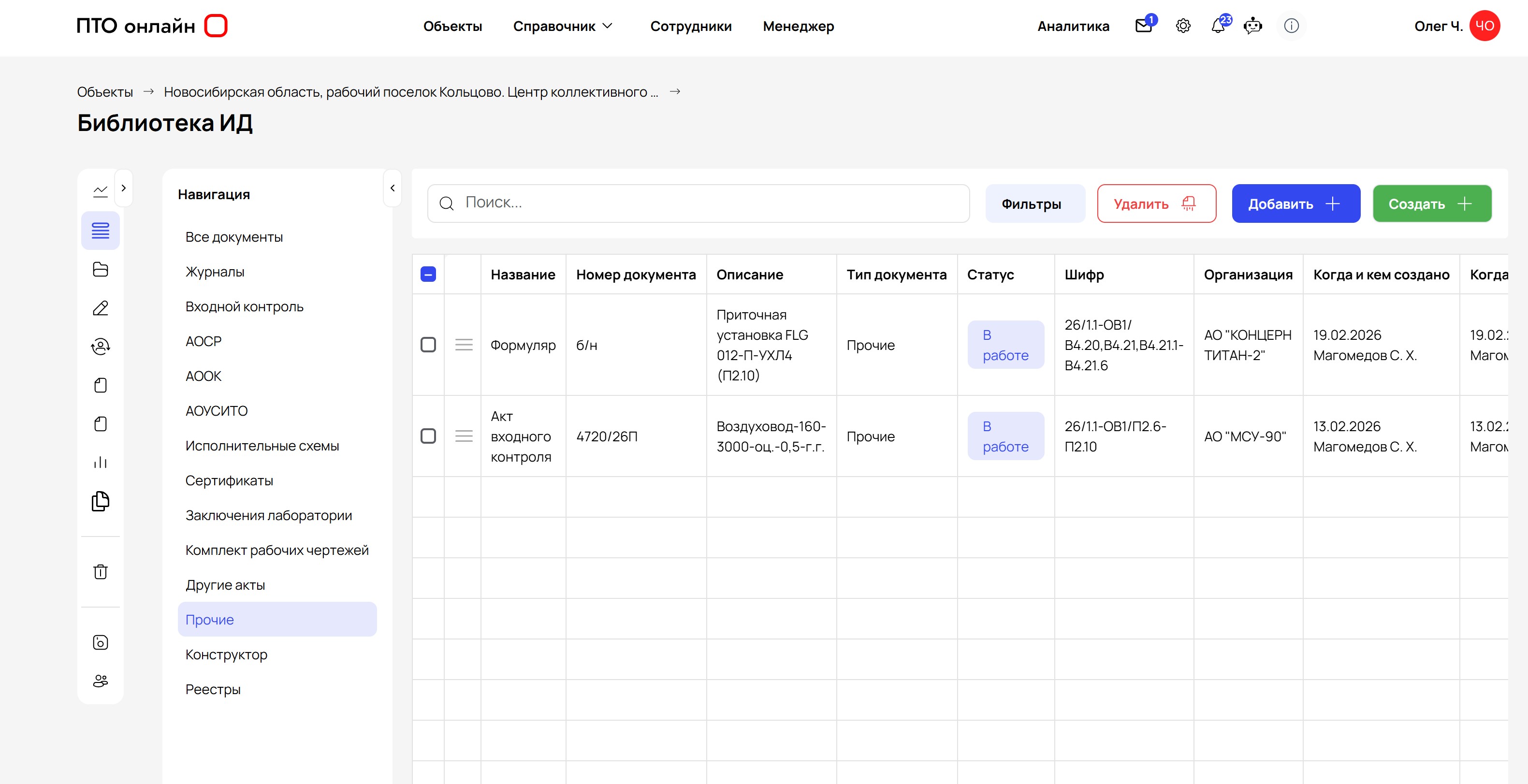
Specialized software operates on the principles of a Common Data Environment (CDE). The architecture of the PTO Online platform is based on inheritance: reference and regulatory information is entered into the system once and is then automatically distributed across all connected registers and forms. Cloud architecture provides role-based access control and allows construction project participants to work together in real time without conflicts caused by saving data.
Comparative analysis: when a move to specialized software is justified
For small subcontracting jobs with a limited amount of documentation, basic spreadsheets are often sufficient. However, moving to specialized cloud software becomes economically and technically justified under the following conditions:
There are more than two or three PTO engineers on the project who need shared access to registers.
There are strict requirements for regular, standardized reporting to the general contractor or client.
There is a large range of materials in use that requires rigorous tracking of certificates and quality passports.
Conclusion
The choice of tools depends directly on the scale of the construction project. Moving away from spreadsheets in favor of specialized solutions is a natural stage in the digitalization of a construction company. Above all, this process is intended to standardize data, improve process transparency, and minimize risks associated with human error.
Talk to us about PTO document workflow
Leave your name and phone number. We will call you back and suggest a suitable format for the discussion.