How to assess PTO maturity in a contracting company
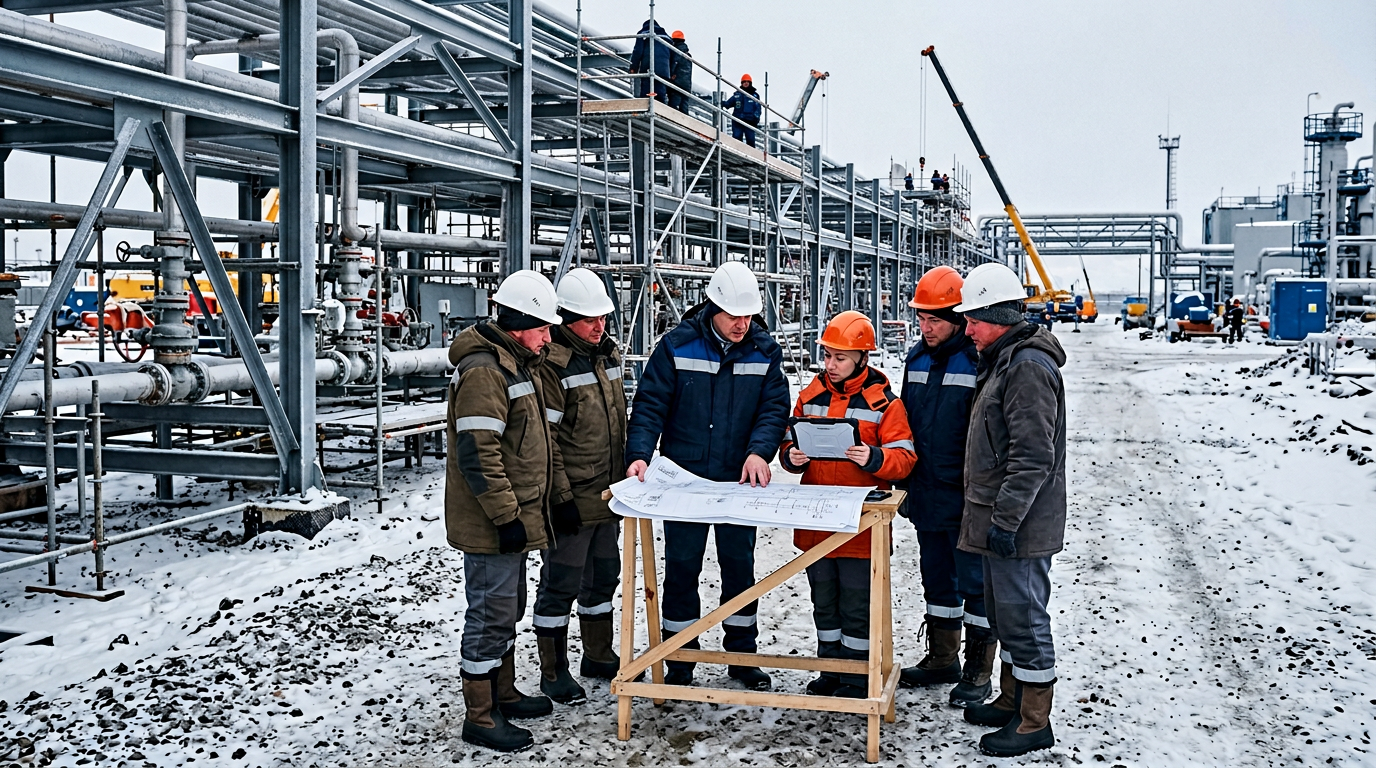
A manager at a contracting organization rarely doubts that they "have a PTO." The department is in place, engineers are assigned to sites, and certificates and logs are eventually delivered. The debate begins elsewhere: are the processes truly established, or does each site follow its own rules, with success measured by the formula, "we managed somehow last time"?
In practice, PTO maturity is neither headcount nor the presence of software. It is predictability: a new site does not require rebuilding the workflow from scratch each time, replacing an engineer does not erase the team’s knowledge of the documentation package, and submitting documentation does not turn into a frantic rush two weeks before acceptance. This article explains how to assess PTO maturity in a contracting company: which signs distinguish an established operating model from a "firefighting" mode, and what can be checked without an external audit. This is an informational guide, not a picture of an "ideal department" or an attempt to substitute software procurement for a process standard.
What is commonly mistaken for PTO maturity
In discussions, maturity is often equated with outward signs: the company bought a platform, hired an experienced head of PTO, or assembled a folder of templates. These steps may help, but they do not create maturity on their own. Templates without rules for using them quickly diverge into multiple versions. Software without a process standard becomes an expensive archive. A strong manager may keep the process in their head, but when they leave, the department returns to manual work.
It is easier to assess a mature PTO by looking not at its tools, but at how the department operates at a site. First question: can the same workflow be put in place at a new site within a week, just as it was at the previous one? Second: can the team see in advance what is missing from the documentation package, or does the client have to point it out each time? Third: does the subcontractor clearly understand the required format and deadline for submitting documents, without a series of clarifying calls?
If the answers are "ask Petrov" or "it varies here," the process is not yet established, even if the department has formally existed for many years.
Three levels: from chaos to a repeatable process

It is useful to view maturity through three levels, not as a numerical score, but as a diagnostic for your own company.
Level 1 - reactive. PTO becomes involved when something is already urgent: a certificate is needed for payment, an order has arrived, or an acceptance date has been set. Documents are assembled retroactively, versions reside with individual employees, and package completeness is checked at the last moment. At this level, the department can often carry one project and a small team, but any increase in workload immediately affects deadlines.
Level 2 - standardized. There are standard templates, registers, deadlines by document type, and a basic division of roles between the office and the site. The workflow is no longer invented separately for every project, but much still depends on discipline: one missed status triggers a chain of manual corrections.
Level 3 - managed. The process is documented and can be passed on to new staff: an engineer joins through an established procedure, statuses and package completeness are visible without searching through folders, and subcontracting is coordinated according to clear rules. Errors on a construction site are inevitable, but they do not disrupt the entire operating model or require rebuilding the package from scratch.
Most contracting companies fall somewhere between the second and third levels. A manager’s task is to understand where the chain breaks, rather than argue about whether the company is "mature" or not.
Organization and roles: who is responsible for what
The first set of criteria is not the staffing chart, but clarity of responsibility. At every site, it should be clear who maintains as-built documentation on the contractor’s side, who receives primary documents from the site, who communicates with the client, and who closes the client’s technical-supervision comments.
A typical sign of immaturity is the phrase, "PTO does everything." In reality, one department cannot simultaneously maintain the archive, monitor production, check the formal correctness of documents, and chase subcontractors. When boundaries are not defined, documents get stuck between the site manager and the office, and disputes about quality turn into disputes about who should have noticed the error in the first place.
The second check is whether people can be replaced without disruption. If the departure of one engineer puts phase handover at risk, maturity is low, regardless of that person’s qualifications. An established process means that the site structure, registers, statuses, and decision history are available to the team rather than hidden in personal spreadsheets.
The third check is the connection with project management. PTO should not learn that a phase deadline has shifted from a site manager’s chat. If the schedule and document workflow exist separately, as-built documentation will always be catching up with construction.
Document workflow: is there one consistent logic across sites?
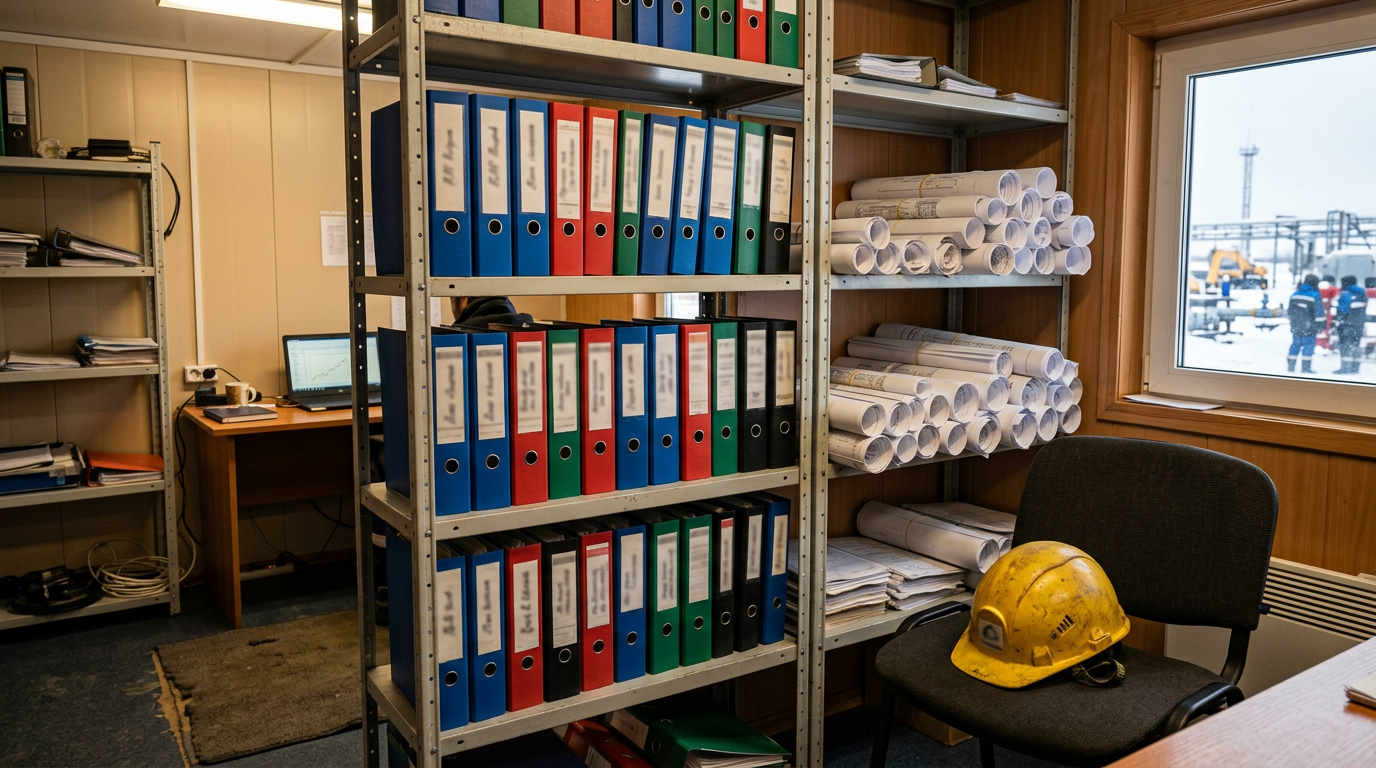
Maturity is clearly visible in repeatability. The company’s forms may differ from one project to another because clients differ, but the logic should remain the same: how a document is created, what status it has, where the current version is stored, and how it enters the register.
In a weak operating model, every project has its own "folder architecture." One project keeps its register in Excel, another in Word, and a third relies entirely on one engineer’s personal cloud drive. Files are named differently, and the final version is found by the date of the last email rather than by its status.
The signs of maturity here are straightforward:
- there is a list of mandatory documents for standard types of work;
- it is clear which document is primary at each stage: a log, certificate, drawing, or certificate of conformity;
- corrections are made according to a rule, not simply "as time allows," without duplication across different systems;
- the register is compiled from information that has already been recorded, rather than through a separate overnight marathon.
If, when moving to a new site, an engineer spends another week figuring out "how we do things here," standardization does not yet exist, even if corporate templates are available on a shared drive. A mature PTO sees gaps in the package before the client’s review, not after the document package is returned.
Scaling: multiple projects and staff turnover
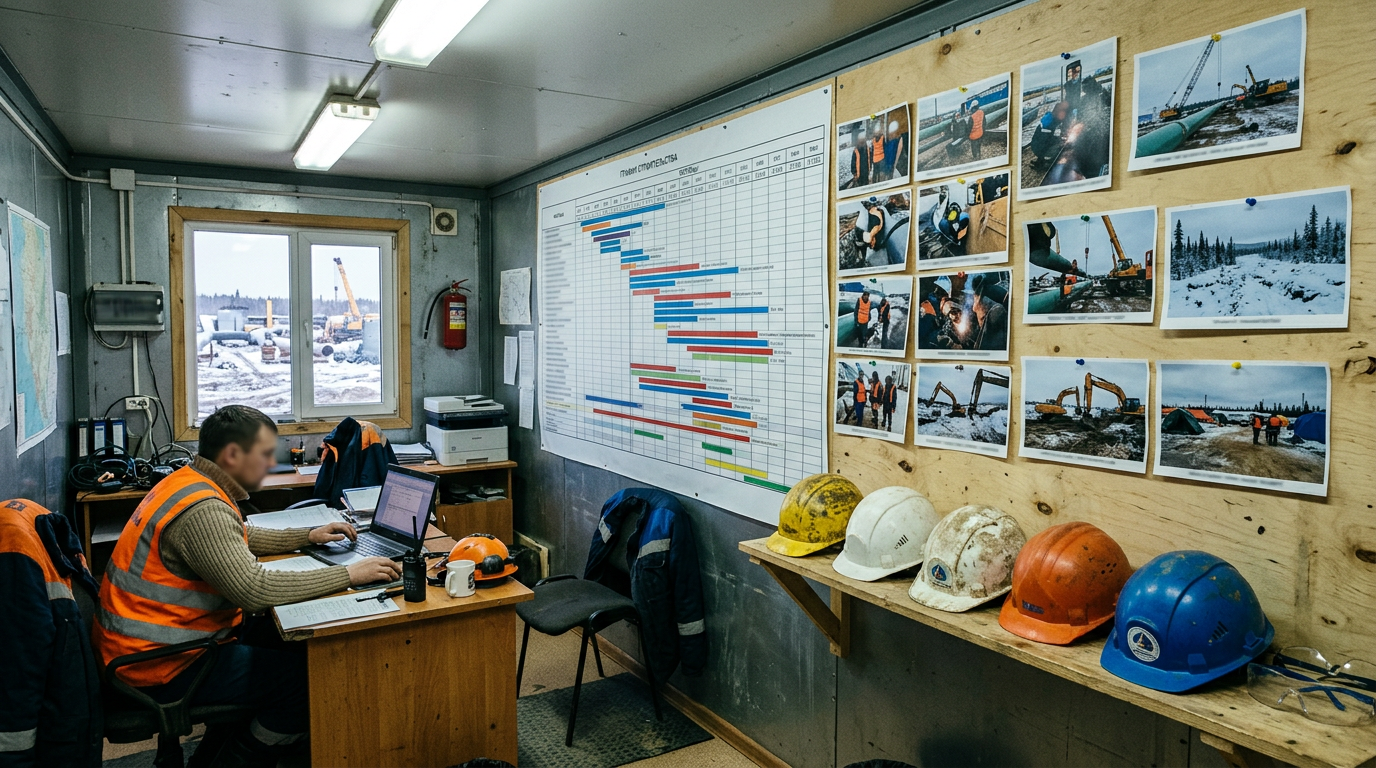
A process can be considered established only if it withstands a growing workload. One strong engineer on one project is not yet a system.
The check is simple: take two projects running in parallel and compare the answers to standard questions. Where is the current register? What is the status of the latest certificate for a particular scope? Who closes the technical-supervision comment? If the answers differ not because of the client’s requirements but because of internal disorder, maturity rests on individual people.
Staff turnover is the second test. A contractor rarely runs one project with the same team from start to finish. If a new engineer spends a week merely "taking over by word of mouth," without a structured set of project data, the accumulated order does not survive the handover.
The third test is several subcontractors working at once. A mature operating model sets the format for accepting their documents in advance: what is mandatory, by what deadlines, and in what form. In a weak model, the parties negotiate through correspondence every time and manually move other companies’ files into their own register.
At the third level of maturity, it is useful to compare how a single project model in specialized PTO services helps maintain consistent rules across different sites. This is a practical benchmark for a pilot, even if an immediate purchase is not under consideration.
How PTO connects with construction operations and subcontractors

PTO does not exist separately from construction. Maturity is visible at the interfaces: with production, estimating, subcontracting, and the client’s technical supervision.
For construction operations, a mature model means that the fact of work is recorded before a certificate is prepared retroactively. The site manager and PTO rely on the same data: quantity, date, basis, and supporting attachments. A gap where "one thing happens on site and another appears in the certificates" is a sign of a process that was never brought to completion.
With estimating and progress billing, maturity appears in regular reconciliation rather than a last-minute rush before the KS-2 form. The engineer understands which item is closed, where the balance remains, and where a discrepancy requires approval.
With subcontracting, a mature PTO does not replace contractual relationships, but it maintains a document standard: what is accepted, what is returned for revision, and how another party’s package is included in the master register without duplicates. If the general contractor assembles subcontractors’ as-built documentation from messengers every time, that is a maturity bottleneck, not simply the "nature of subcontracting."
What maturity does not guarantee
PTO maturity does not mean there will be no problems on a construction site. Design changes, delayed deliveries, conflicts with subcontractors, and demanding client requirements will not disappear. An established process does not eliminate construction uncertainty.
Maturity also does not require the most expensive IT system. A company can have a simple digital operating model, clear procedures, and stable results. Conversely, a platform implemented without data discipline produces a familiar arrangement: "officially in the system, but in reality in Excel."
Finally, maturity is not a one-time project. Contractors change project types, clients, and contract formats. PTO procedures must be reviewed: what worked for one general contract may not suit an industrial project with strict technical supervision. A mature company can adapt the process without breaking its foundation: roles, statuses, completeness checks, and a unified register logic.
How to assess maturity: what a manager should check
Assessing PTO maturity in a contracting company means seeing whether the process operates by rules: roles are clear, the logic for maintaining as-built documentation is the same across projects, completeness is visible before the client’s review, and personnel changes or a growing number of sites do not erase the accumulated order.
If, when checking these criteria, the answers depend on specific people rather than on a procedure, maturity still lies ahead. The first step is usually not software procurement, but documenting what strong specialists already do well and bringing that practice up to the company level. A few simple quarterly indicators, such as returned packages, time spent on a standard package, and the time needed to close comments, will show whether there is progress without vague statements such as "it has gotten better."
If you would like to compare the criteria in this article with practice at your own sites, see the materials at pto-app.ru. There is no obligation to change everything at once; the goal is to give the team a clear picture.
Get advice on organizing your PTO workflow
We will discuss how to build a repeatable document workflow across your company's projects.